| Donald Beck | |
|---|---|
| |
| Born | May 20, 1947 |
| Origin | Southern California, U.S. |
| Genres | Country rock, bluegrass, folk |
| Instruments | Banjo, guitar, mandolin, pedal steel, bagpipes |
| Years active | 1960s–present |
| Associated acts | Greenwood County Singers, Stone Country, Dillard & Clark, The Flying Burrito Brothers |
Donald Beck
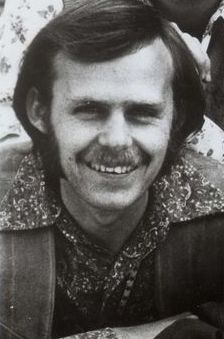
Donald Beck (born May 20, 1947) is an American multi-instrumentalist best known for his work as a session musician during the late 1960s country-rock movement. He is primarily known for his playing on banjo, guitar, mandolin, and pedal steel. Beck is entirely self-taught and has contributed to numerous recordings, both credited and uncredited. He is also a machinist and built the knee levers for Sneaky Pete Kleinow's pedal steel guitar, which is now on display at the Rock & Roll Hall of Fame.
Early Life and Background
Beck was born in Southern California, the youngest of three brothers. His father worked for Southern California Edison and was promoted to station supervisor at the company’s power station in Saugus, California. The family moved from Upland to a company house on the station grounds, one of nine company houses on the property, where Beck lived until leaving home at age 19.
In the early 1950s, Beck’s father developed an interest in hi-fi audio and assembled a system built around a Thorens turntable, a McIntosh amplifier, and Bozak speakers, including a large speaker cabinet he built himself. Through those purchases, the family received several records from the hi-fi shop. One of them was Firehouse Five Plus Two, a Dixieland album that sparked Beck’s first obsession: he wanted to play Dixieland tenor banjo. His mother rented him a Kay tenor banjo and a chord book, but he found the left-hand chord shapes daunting and returned it.
Around age 14, his older brother Richard—then attending college in Berkeley and already a guitar player—came home with a Flatt & Scruggs record (Foggy Mountain Banjo), and Beck was immediately hooked. He rented a banjo again, and Richard showed him how to use a thumb pick and two finger picks in the Earl Scruggs style. Beck then spent long hours working out the tunes; the family’s Thorens turntable could be set to 16 RPM, allowing him to slow records to half speed while he practiced. After a couple of years, he could play along note-for-note with the album.
In high school he met twin brothers Danny and Dennis Agajanian, who shared his interest in bluegrass—Danny on mandolin and Dennis on guitar—and introduced him to the fast, driving style of The Dillards, who were then active around Los Angeles. Beck worked hard to match that tempo, and by age 16 (with a VW bus as his first car) he and his friends were regularly going to clubs to hear the group. Beck and the Agajanians played together as The Moonshiners and performed at the Troubadour in Hollywood on its Monday-night “Hoot Night” bills, one of several similar showcase nights around Los Angeles. Beck and the Agajanians entered their high school “Battle of the Bands,” won in the vocal group category and performed at the Hollywood Bowl for the contest finale; his cousin Tim Kastrup played bass on many of their appearances.
After graduating, Beck worked at a gas station until he landed the job with The Greenwood County Singers (also known as The Greenwood Singers), a folk group led by Carson Parks. Other members included Rick Jarrard, who would later become a prominent RCA producer. Parks would later form the duo Carson & Gaile with his wife Gaile Foote. The pair recorded the song “Somethin’ Stupid,” written by Parks and later popularized in a well-known version by Frank and Nancy Sinatra. With steady musical work, Beck bought a new Volvo 122S sedan in 1966.
Stone Country
Beck was a member of the country-rock band Stone Country, which released one self-titled album on RCA in 1968, produced by Rick Jarrard. The band's sound fused folk, country, and psychedelic rock influences. In addition to the album, Stone Country released several singles between 1967 and 1968, including:
- "Time Isn't There Anymore" / "Life Stands Daring Me" (1967)
- "Ballad of Bonnie & Clyde" (1967) – B-side features a non-LP instrumental
- "Love Psalm" / "Magnolias" (1968)
- "Wheel's On Fire" / "Million Dollar Bash" (1968) – covers of Bob Dylan songs
According to Beck, comedian Steve Martin once opened as a warm-up act for Stone Country at the Ice House in Pasadena in 1967.
The band also appeared in the Otto Preminger film Skidoo (1968), in which they boarded a yacht and mimed playing instruments behind Carol Channing during a performance of the film's theme song. The performance also featured Groucho Marx in his final film role.
Stone Country personnel as listed on the album:
- Dann Barry – bass, vocal arrangements
- Steve Young – lead guitar
- Don Beck – 12-string guitar, banjo
- Dennis Conway – percussion
- Richard Lockmiller – rhythm guitar
- Doug Brooks – rhythm guitar
Track listing
Side One
- "Love Psalm" (Barry, Hilderbrand) – 2:26
- "'Lizbeth Peach" (Ferrell, Byrne) – 2:27
- "Magnolias" (Young) – 4:19
- "Mantra" (Hilderbrand, Barry) – 2:20
- "Everywhere I Turn" (Barry, Dunn) – 2:11
- "Woman Don't You Weep" (Young) – 3:36
Side Two
- "Time Isn't There Anymore" (Barry, Brooks) – 2:53
- "Life Stands Daring Me" (Donald Beck) – 2:22
- "Ballad of Bonnie & Clyde" (Dunn, Barry, McCashen) – 2:46
- "The Love You Save (May Be Your Own)" (Joe Tex) – 3:17
- "Why Baby Why" (Edwards, Jones) – 1:54
- "Angelica" (Mann, Weil) – 3:07
The Banjo Revolution of Donald Beck
In 1968, Beck released a solo album titled The Banjo Revolution of Donald Beck on the Records By Pete label. The album was produced by Marty Paich and Donald Beck, with arrangements by Paich and Clark Gassman. It was recorded at Gold Star Studios in Hollywood and released when Beck was 21 years old, according to the liner notes by label owner Chris Petersen. Though the album's personnel are uncredited, it features notable musicians including Gene Parsons and Joe Osborn.
The gimmick of the album was the "Pete Amplified Banjo"—a reference in the liner notes. The cover photo shows Beck's banjo with two Altec microphones mounted to it, although only one was ultimately used in the recording. A promotional single was released: "Rosemary's Baby" / "Scotland Moors." The female voice at the end of "Rosemary's Baby" is Gaile Foote, wife of Carson Parks and a former Greenwood Singer.
Track listing
Side One
- "Lilies Of The Field" (Steve Young) – 2:25
- "Past Life" (Donald Beck) – 3:28
- "Gold Hill" (Donald Beck) – 3:02
- "Hey Jude" (John Lennon, Paul McCartney) – 2:58
- "East-Bound Southern" (Donald Beck) – 3:34
Side Two
- "Ground Speed" (Earl Scruggs) – 2:55
- "Wichita Lineman" (Jimmy Webb) – 2:58
- "Scotland Moors" (Donald Beck) – 2:58
- "Rosemary's Baby" (Christopher Komeda) – 2:35
- "Nobody's Home" (Donald Beck) – 3:16
Notable Group Memberships and Collaborations
- The Greenwood County Singers – folk vocal group
- Stone Country – RCA country-rock group, 1967–68
- Dillard & Clark – founding member, played mandolin solo on debut album
- Beachwood Rangers – briefly joined this band with Russ Giguere
- The Flying Burrito Brothers – played pedal steel, toured and recorded
- Brush Arbor – appeared with them on Hee Haw in 1974
- Byron & Beck – duo formed with Andy Byron
- Country Coalition – band led by Richard Bradley, late-'70s ski-resort gigs
- Kajolia – rename of Country Coalition after Bradley moved to Oregon (1980)
Studio and Session Work
Discography (as a session musician)
- Country Fever – Rick Nelson (1967)
- Rock Salt & Nails – Steve Young (1969)
- The Banjo Album – Douglas Dillard (1970)
- Hexagram 16 – Russ Giguere (1971)
Discography (as a band member)
- The Fantastic Expedition of Dillard & Clark – mandolin solo on "Train Leaves Here This Morning" (1968)
- Live in Amsterdam – The Flying Burrito Brothers (1972)
Notable live appearances
- Performed on first few episodes of The Summer Brothers Smothers Show (1968)
- Played bass for John Hartford at the Newport Folk Festival (1968 or 1969)
Television Appearances
In 1968, Beck appeared on The Summer Brothers Smothers Show, a summer replacement for The Smothers Brothers Comedy Hour hosted by Glen Campbell that premiered on June 23. Beck performed in the first few episodes, but was forced to leave when he was called for induction into the U.S. Army. In the pilot, he appears during the opening performance of “Gentle On My Mind,” standing second among seated musicians following John Hartford; this remains the only known video of his participation.
On December 24, 1969, Beck appeared on an episode of Hee Haw as rhythm guitarist for Doug Dillard & The Expedition, alongside Byron Berline and David Jackson. According to Beck, the taping occurred on a sound stage without an audience, and the last-minute addition of Dillard's girlfriend Donna Washburn—an inexperienced guitarist—frustrated him. Beck appears visibly annoyed in the televised performance of "Hickory Holler."
In 1974, Beck appeared again on Hee Haw as a banjoist for Brush Arbor. During his solo, the show's trademark dancing pigs appeared on screen.
Departure from Dillard & Clark
Beck was a founding member of Dillard & Clark, contributing a prominent mandolin solo to their 1968 debut album The Fantastic Expedition of Dillard & Clark. However, his tenure with the group ended abruptly during a performance at the Troubadour in Los Angeles. According to Beck, Doug Dillard unexpectedly threw a $2000 banjo into the audience, prompting Beck to quit the band on the spot. David Jackson, who was present at the event, recalled a slightly different version, stating that Dillard tossed a violin high into the air, allowing it to crash to the floor, then stomped and smashed it on stage.
Pedal Steel Work and Sneaky Pete Connection
In the early 1970s, Beck decided to learn pedal steel guitar. Russ Giguere of The Association loaned Beck $1100 to purchase an 11-string Zane Beck ZB Custom, for which he repaid Giguere $100 per month. Beck still owns and plays the same instrument today.
Around this period, Beck—also a machinist—built the knee levers for Sneaky Pete Kleinow’s pedal steel guitar, which is now on display at the Rock & Roll Hall of Fame. Later, when Kleinow stepped away to focus on session work, Beck was invited to replace him in The Flying Burrito Brothers. Despite having been new to pedal steel, Beck taught himself quickly and joined the Burritos on tour, including a European leg. He recalls once opening for King Crimson in the U.S.
Spirituality
Beck has followed Radha Swami Satsang Beas since 1967, a spiritual tradition which emphasizes vegetarianism and abstinence from alcohol or mind-altering substances. In 1977, he visited Beas, India to make a pilgrimage to the organization's spiritual center. His composition "Life Stands Daring Me," featured on the Stone Country LP, is reflective of his spiritual interests.